



 The Barbell bench is possibly the most popular weightlifting movement in the gym, but who knew there were such different ways of performing the lift, to achieve different goals? Benching for Hypertrophy basically just means performing the Bench Press to optimise pectoral engagement and growth, while Benching for Powerlifting means trying to lift as much weight as possible. The key difference between these will be the range of muscles used. For the Hypertrophy bench the aim is to use primarily the Pectoral (Chest) muscles, whereas the Powerlifting Bench will also incorporate more of the Anterior (Front) delts and Triceps.
Hypertrophy can be defined as follows: “Muscle hypertrophy involves an increase in size of skeletal muscle through a growth in size of its component cells. Two factors contribute to hypertrophy: sarcoplasmic hypertrophy, which focuses more on increased muscle glycogen storage; and myofibrillar hypertrophy, which focuses more on increased myofibril size.”
Whereas “Powerlifting is a strength sport that consists of three attempts at maximal weight on three lifts: squat, bench press, and deadlift As in the sport of Olympic weightlifting, it involves the athlete attempting a maximal weight single lift of a barbell loaded with weight plates.”
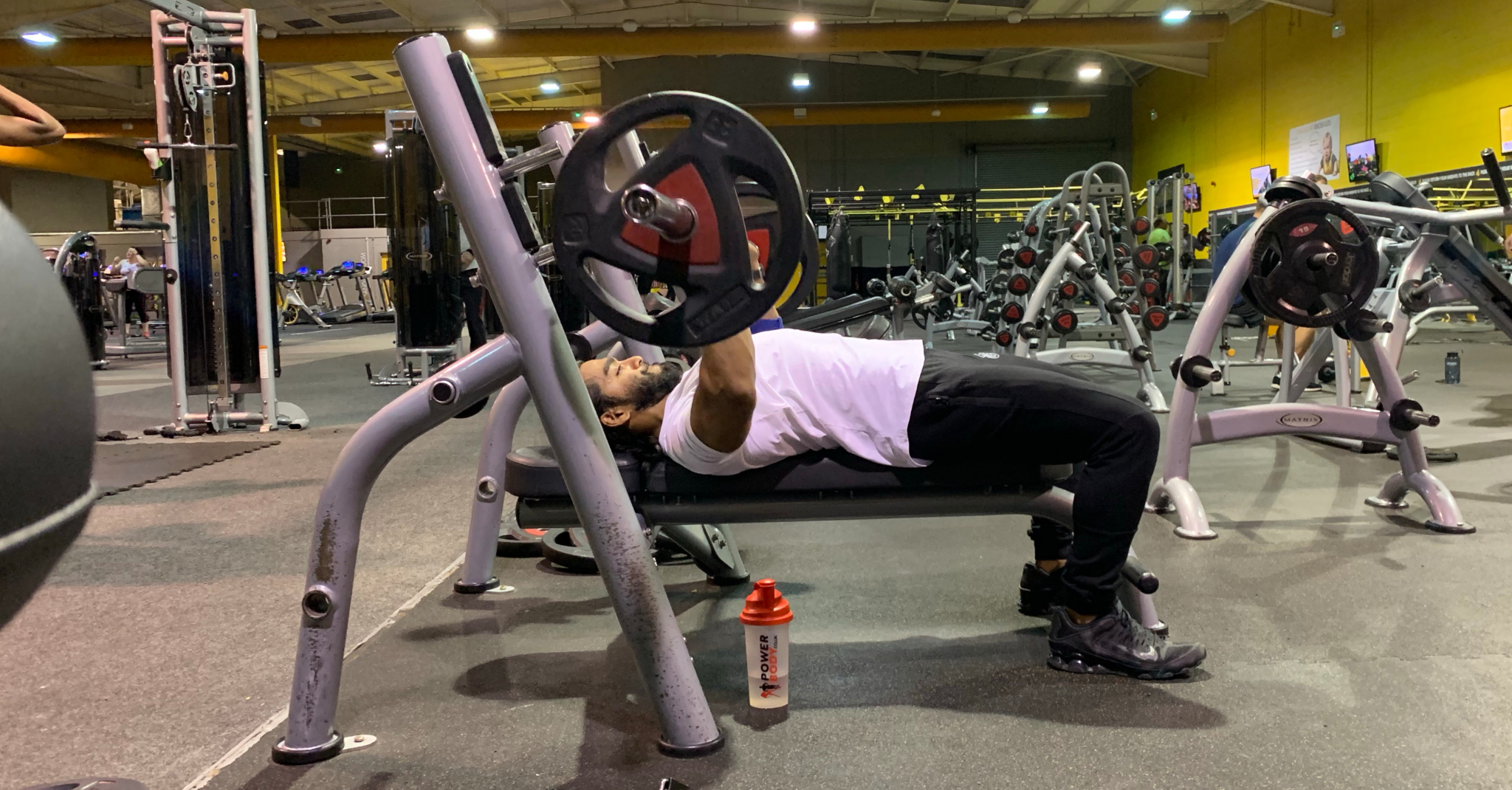 Let’s take a look at the differences in technique:
Conventional Bench Press
Keep your chest raised, and feet comfortably planted. A small arch in your lower back will prevent you from straining. Grip the bar at a comfortable width, a hand each side wider than shoulder width. Bring the bar down to the lower part of your chest. When you raise, be sure not to lock your elbows, as this can easily cause injury.
Benching for Hypertrophy
The spine will be far more neutral for a longer bar path from the top of the movement down to the chest, Wider and Higher elbows for less Tricep engagement and more pectoral activation, Bar higher seated up on the chest. This style is more targeted towards Bodybuilders and models whose primary focus is Aesthetics.
Benching for Powerlifting
Arched Spine for a shorter bar path from the top of the movement down to the chest, Tighter Elbows for Tricep and Anterior Delt activation, bar lower down on the highest part of the thorax. This style is more geared towards, you guessed it… Powerlifters, as well as strong men and Olympic Lifters.
 Each of these techniques can be very beneficial no matter what style of training you’re working on. If you’re a powerlifter, looking to add more plates on to your maximum bench press, then Benching for Hypertrophy can truly help you to improve. Increasing muscle volume can have serious benefits on capacity for strength. If bodyweight isn’t an issue, it is certainly advisable to increase your pectoral muscle tissue to allow for optimal strength. The reverse can also be said to be true. Making good use of larger muscles by really putting them to the test and building your strength can help to develop muscle density, which means you won’t lose your gains so quickly when you have time off from the gym. Developing good strength and muscle density can help for long-term physique progress, by stopping your body from shrinking during long stretches of inactivity.
Which Bench style should you be using? Well it’s quite clear that each of these styles has it’s clear benefit. If you’re looking to enlarge the size and improve the shape of your pectoral muscles, the best way to do this is certainly through hypertrophy benching. And if you would like to increase the amount of weight you are able to lift, then certainly the powerlifting style is the way to go. But it is certainly advisable for most athletes who do not compete in specific areas to consider trying both methods to receive the combined and complemented benefits of each.