



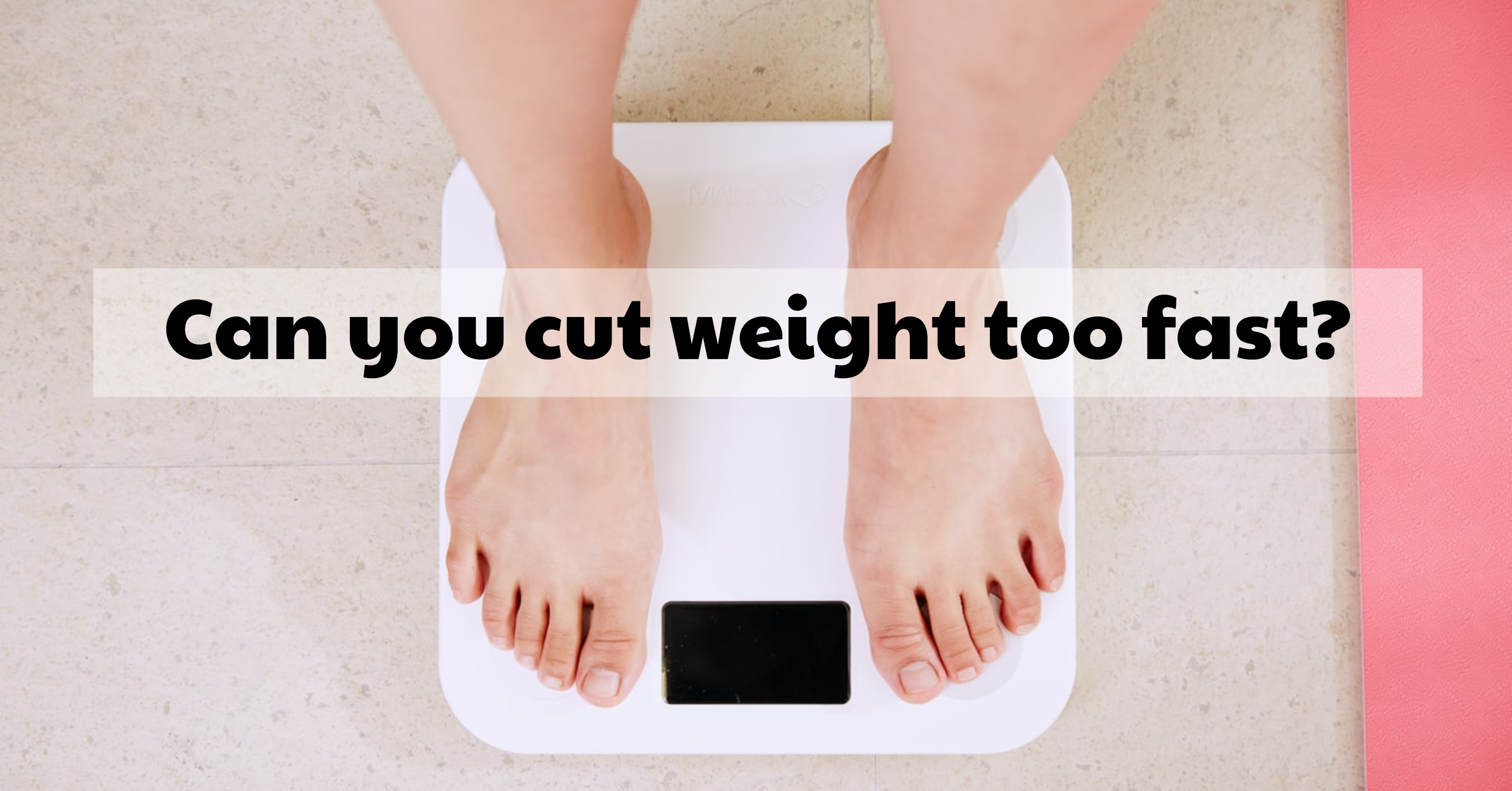
 Cutting weight, whether for a show, or just for your summer body, can be very tricky, especially when it comes to patience. Many of us want those hard-earned results NOW! Most people who need to lose weight can get health benefits from losing even a small amount of about 5% of their weight if they keep it off. Doesn’t seem like much, does it?
While it's tempting to try and lose weight as fast as possible, it's normally not recommended. Diets which promote rapid weight loss are usually very low in calories and therefore nutrients. This may put you at risk of many health problems, especially if you follow a rapid weight loss diet for too long. Keep in mind that many experts say it’s best to lose weight gradually. It’s more likely to stay off that way. If you shed pounds too quickly, you’ll lose muscle, bone, and water instead of just fat. Aim to lose 1-2 pounds weekly, and avoid fad diets or products that make promises that sound too good to be true, (They usually are). It’s best to base your weight loss on changes you can stick with over long periods of time.
 You’ve probably heard the saying, “calories in, calories out”; as in, you just need to burn more calories than you eat and drink. This can also be called a calorie deficit which you may well have heard of. It is the most basic principle of weight loss, and it the key driving factor in a person’s body weight changes. However, loss of weight does not always mean a reduction in body fat percentage, as there are other things which can be lost such as muscle, water and more. Your metabolism, how well your body turns calories into fuel, is also very important. And if you cut too many calories too fast it can have a negative impact on your metabolism. You slow down your metabolism, and that can make you fall short on some vital nutrients.
When looking at your diet, the key is flexibility. A flexible plan doesn't forbid certain foods or food groups, but instead includes a variety of foods from all the major food groups. A healthy diet includes vegetables and fruits, whole grains, low-fat dairy products, lean protein sources, and nuts and seeds. Don’t make your diet too strict or extravagant, because the most important factor is longevity. If you cannot adhere to your diet, it is doomed to fail. So be sure to allow space for some of your treats in measured amounts, to allow you to stick to the diet well. But again this needs to be measured. Losing weight too fast may slow down your metabolism. ... Several studies have found that losing weight fast by eating fewer calories may cause you to burn up to 23% fewer calories per day. Two reasons why the metabolism drops on a very low-calorie diet are a loss of muscle and a fall in hormones that regulate your metabolism, such as the thyroid hormone.
 Exercise is the next step. Don’t be afraid of the weights! Weights can be your best friend when it comes to fat loss! When a person begins and maintains a new exercise regimen and limits calories, the body does two things to “burn fat.” First, it uses the energy stored in the fat cells to fuel new activity. ... The brain signals fat cells to release the energy packages, or fatty acid molecules, to the bloodstream. Again there is a great importance with your diet and quantity of exercise. If you eat too little and exercise too hard, you will find yourself fatigued, dehydrated and potentially in ill-health. So it is very important to take it easy and listen to your body!