



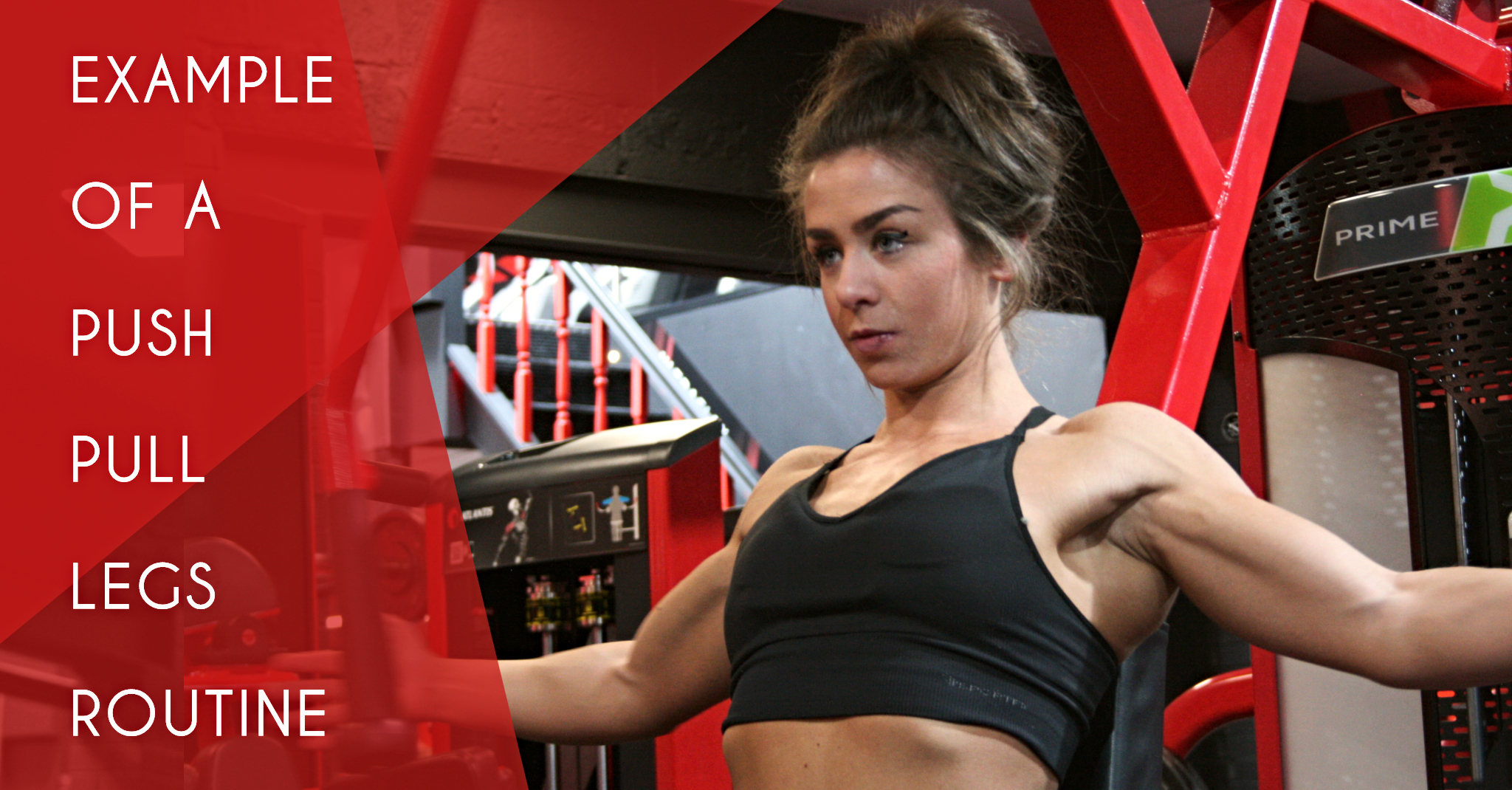
 There are many different training splits to choose from, but perhaps the most popular of all is Push Pull Legs. The push/pull/legs split is a weight training schedule that revolves around splitting the body up into 3 groups: upper body pushing muscles, upper body pulling muscles and legs. ... The “legs” workout would train the entire lower body. This primarily includes Quads, Hamstrings and Calves.
Let’s see what this would look like.
Day 1: PUSH
Barbell Bench Press, 5 sets of 5 reps, (Usually approx 80% of maximum)
Incline Dumbbell Bench Press, 3 sets to failure. (70% of maximum)
Military Press, 5 sets of 5 Reps, (80% max)
Tricep Dips, 5 sets to failure. (Weight plate on belt or dumbbell.)
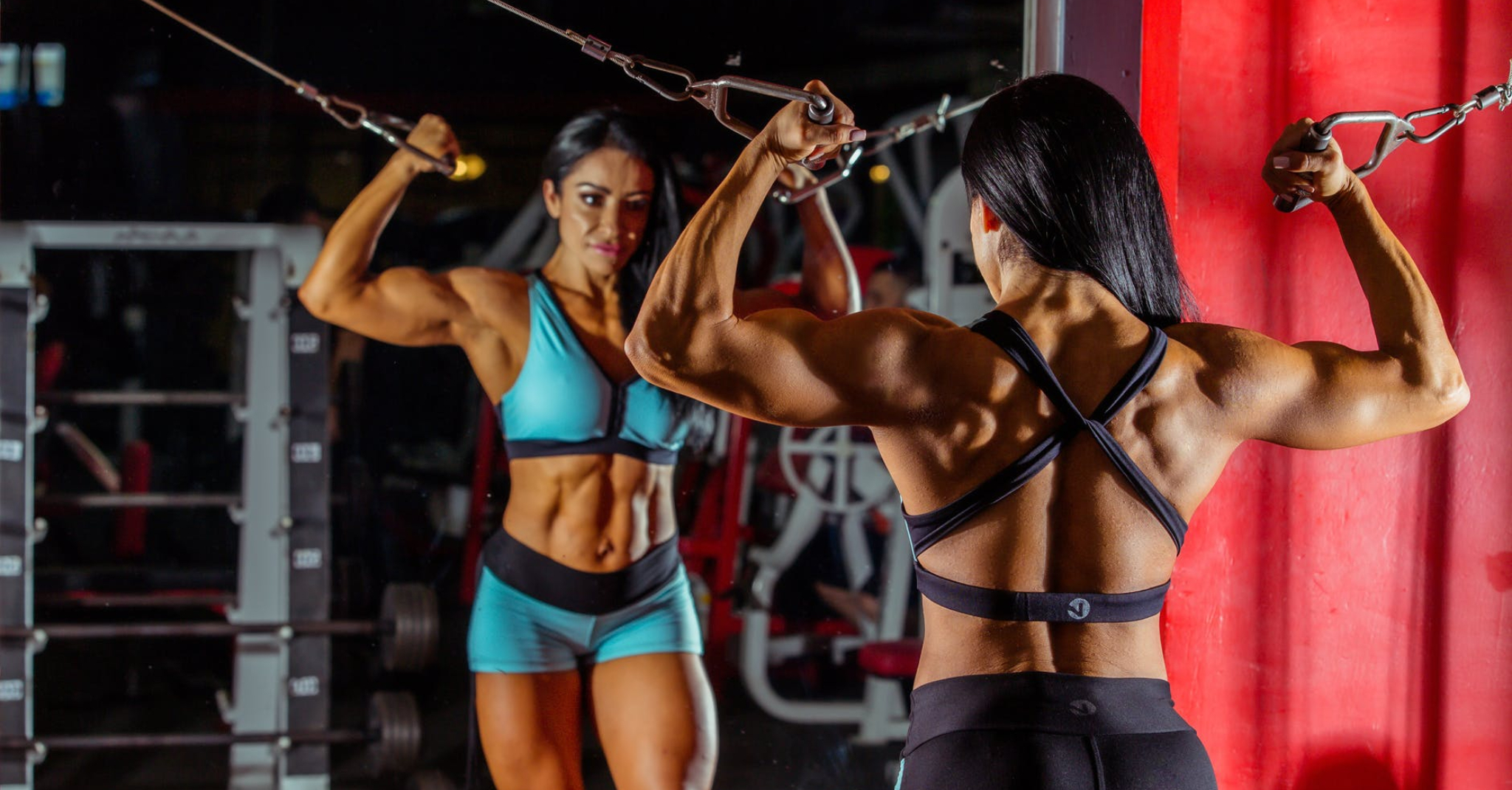 Day 2: PULL
Barbell Row, 3 sets to failure (Failure in this case being poor form, (Moderate weight)
Lat Pull-down, 3 sets to failure, (70% of max)
Deadlift, 5 sets of 2-3 reps. (80-90% of max)
Barbell Curl, 3 sets to failure, (Moderate weight)
Day 3: LEGS
Back squat, 5 sets of 5 reps, (70% of max)
Leg Press, 5 sets of 15 reps, (Use a comfortable but heavy weight.)
Hamstring curl, 3 sets to failure. (Moderate weight)
Dumbbell Calf Raise, 3 sets to failure. (Use a weight which tests your grip strength.)
Day 4: FULL BODY
Following on from the regular Push Pull Legs, you could add a fourth weekly session combining all aspects of the prior, by allowing you to train each muscle-group more than once weekly.
Barbell Bench, 3 sets of 8-12 reps, (70% of max)
Arnold Dumbbell Shoulder Press, 3 sets of 8-12 reps, (Moderate weight)
T-Bar Row, 3 sets of 8-12 reps, (Moderate weight)
Leg Press, 3 sets of 8-12 reps, (Moderate weight)
Deadlift, 3 sets of 3-5 reps, (70-80% of max)
Here are some notes on those functional movements:
Bench press.
Be sure to keep your chest raised, and feet comfortably planted. A small arch in your lower back will prevent you from straining. Grip the bar at a comfortable width, a hand each side wider than shoulder width. Bring the bar down to the lower part of your chest. When you raise, be sure not to lock your elbows, as this can easily cause injury.
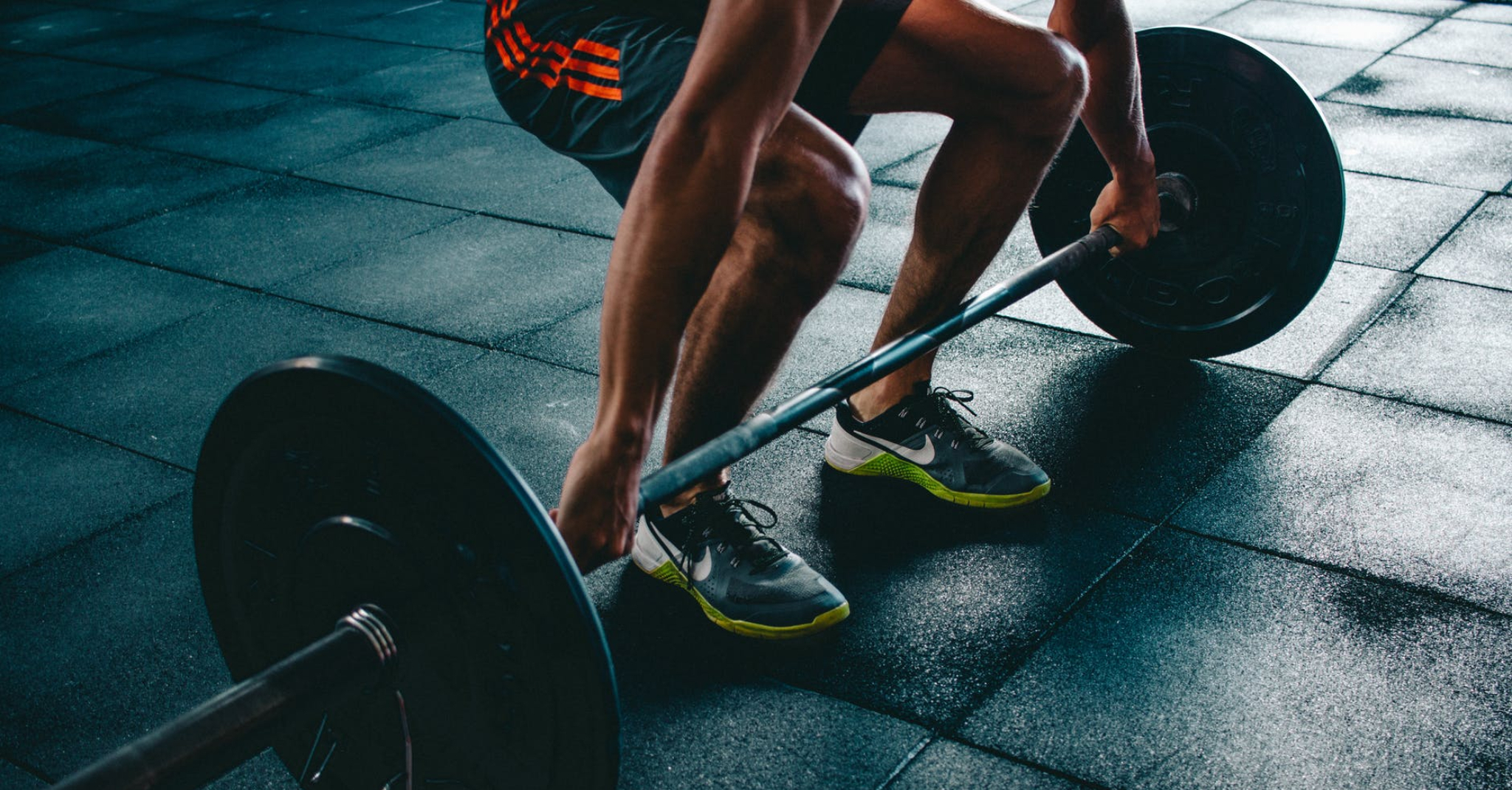 Deadlift.
It is most important to keep a flat back. Do not over strain your back by forcing lumbar lordosis, but it is vital than you do not round-out your back. Avoid very challenging weights until you are comfortable with the movement. Try to focus on transferring the weight into your heel rather than your toes, and keep the bar close to your shins to avoid over-exerting your lower back.
Squats.
Similarly to Dead-lifts, it is important to keep a flat back, and centre the weight over your heels. Try to avoid leaning too far forward, as this will put unnecessary pressure on your lower back. Point the toes slightly outward to allow your hips to sit forward through the squat, allowing you to arrange your posture taller.
Rows.
Whether using a barbell, dumbbells or cables, it is vital to keep your back straight. DO not round out your back while performing these movements. Maintain a mild-squeeze throughout your lats to enhance the efficiency of the movement and prevent injury. Row towards the stomach, as opposed to the chest, this is a common mistake, and will put more pressure on your shoulders and lower back if standing.
Shoulder press.
This now sounds like a broken record... But keep your back straight! Avoid straining your neck, or changing your posture mid-lift to try and raise the weight. If you cannot raise the bar with a straight back and balanced posture, set your ego down, and grab a smaller weight. The exercise will still burn, and you will prevent injury.