



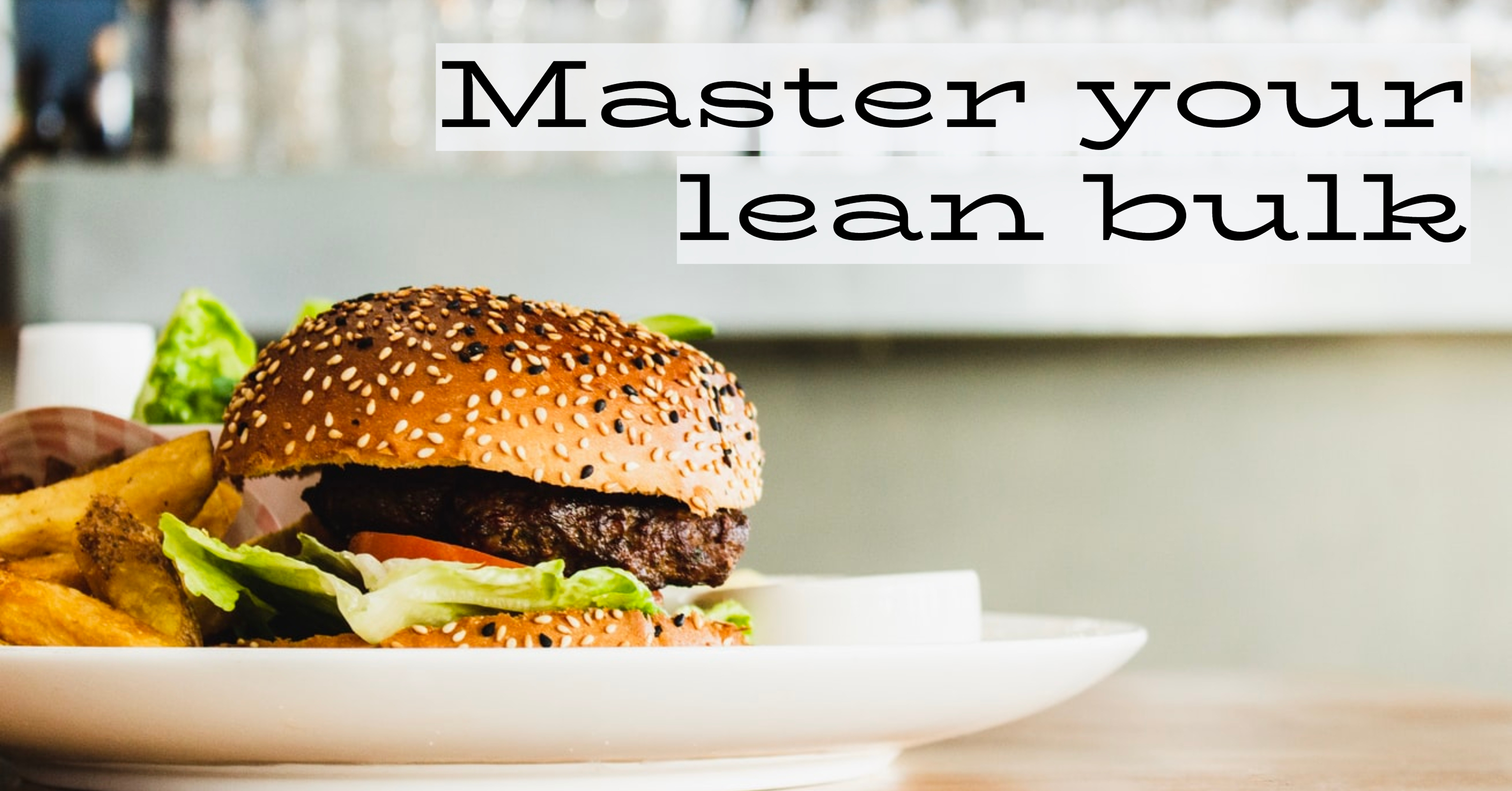
 Everyone loves the idea of staying lean whilst they bulk, and although the principles of doing so are fairly simple, staying relatively lean whilst trying to add as much muscle as possible can become a struggle. A few slip ups here and there will add up quickly and before you know it you are losing visibility of your abs, those veins start to disappear, and you start to look a lot more watery. The result? You panic and immediately cut until you can see the lean gains again. The problem with this, however, is that you aren’t really going to be adding any significant muscle to your frame yoyoing like this.
We are all human at the end of the day, and what’s the point in being in a calorie surplus if you aren’t going to indulge in a few of your favourite foods? I’m pretty sure we have all heard of the term ‘dirty bulk’, where you eat anything and everything in sight with the hope of maximum muscle gains in return. It has become a popular term in the fitness industry and it’s a strategy that does have its pro’s. However, having done both dirty bulks and lean bulks, the smarter and more sustainable in the long run is the lean bulk.
So, what is a lean bulk?
 A lean bulk is determined by how much bodyweight you can add that is predominantly muscle, whilst limiting fat gain. Believe it or not, a lean bulk doesn’t have to include 100% of clean foods, although, for obvious reasons this is a lot better for our health. In a dirty bulk, you are looking to add as much body weight as possible per week or month. Whereas in a lean bulk, the maximum you want to be adding is around 250g a week, or 1kg a month. Any higher than this and you are increasing the risk of accumulating fat gain.
To master your lean bulk, you want to be in a good place body fat wise. There is no point starting a lean bulk if you aren’t already considered lean. Measure your bodyfat and if you come back anywhere below 13%, then you are good to go. If you are above, just cut down until you deem yourself ready.
Consensus for a bulk is to eat 500 calories above your maintenance. However, this doesn’t leave much room for error, which we are all prone to at some point. Its human nature. A few extra calories here and there and you will find yourself adding unnecessary body fat. Instead, you want to be eating an extra 200 – 300 calories a day above maintenance. It shouldn’t really matter too much where the extra calories come for as long as you stick within your extra 200-300 calories daily, but I like to increase my carbs pre and post workout to really help with performance in the gym and recovery post workout.
 There isn’t much else to it. Start your lean bulk at a good body fat and eat only slightly into a calorie surplus. Aim for around 250g of extra bodyweight a week and if you start to creep over that, just drop your calories by a 100 or so and keep tracking your weight.
In the long run a lean bulk will be much more beneficial and sustainable. You are also playing the long game, but If you haven’t realised by now that bodybuilding itself is the longest game in the fitness industry, then maybe lean bulking, even bodybuilding, isn’t for you.