



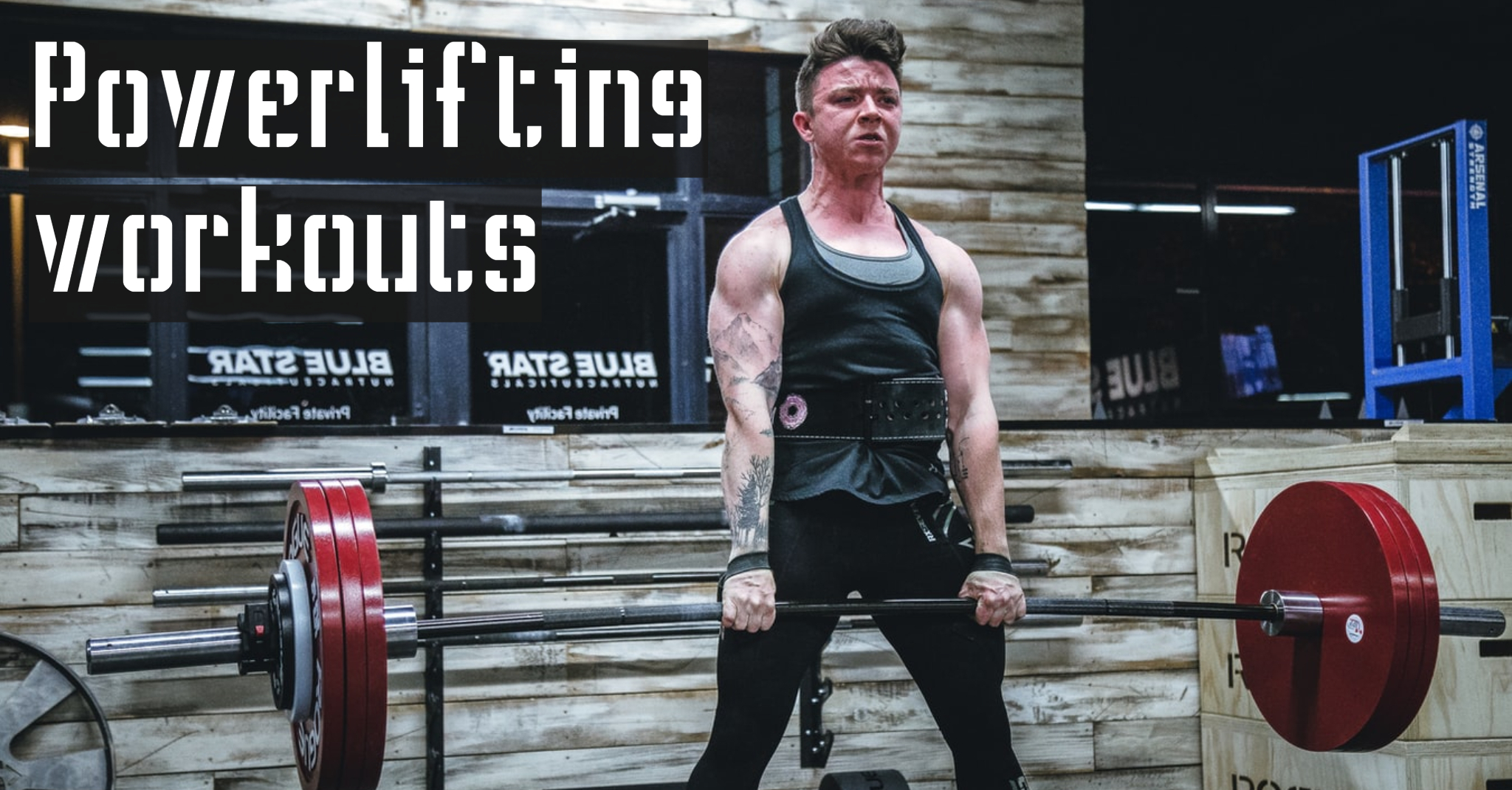
 Powerlifting workouts should be tried and tested even if you aren’t a powerlifter. Especially if you have hit a strength or size plateau.
There’s a new breed of powerlifters coming through now. Almost gone are the days where a powerlifter was nearly always overweight and if you were to look at one, you wouldn’t have a clue they even lifted. Nowadays, powerlifters are generally lean, and you can definitely tell that they lift. Unsurprising really when these guys are consistently loading the bars with heavy weight and eating a diet high in protein.
You can 100% grow from a powerlifting workout. So, if you are worried, you’re going to lose all your muscle or not build any from swapping from your current program, fear not. Eat in a calorie surplus and you’ll be fine.
There are quite a lot of powerlifting workouts, so knowing which one to try is based on the individual. Below I have explained 2 of the most popular powerlifting workouts.
5x5
Most of you have probably heard of 5x5 training. It's great for steady increases in strength but also has great volume for hypertrophy, so if you are worried about not getting enough stimulus from other low volume powerlifting routines, this is the program for you.
 It's super simple to do and all the reps and sets are 5x5 (easy right?). There are two days, A and B. Day A has you performing 5 sets of 5 on the Squat, Bench and Deadlift, in that order. Day B has you doing the same sets and reps, but the order is Squat, Military Press and Barbell Row. A week would look like this;
-
Day A
-
Rest
-
Day B
-
Rest
-
Day A
-
Rest
-
Day B
You basically alternate each session with a rest day in between. If you aren’t recovering, add in an extra rest day. Once you can complete 5 sets of 5 with a given weight, increase the weight for the next workout.
For all you pump chasers, add in a few sets of accessory work after the main compound lifts have been completed.
5/3/1
As with many powerlifting programs, each workout is centred around a specific lift. In 5/3/1 you will either be performing 3x5, 3x3 or 3x5,3 and 1. Hopefully that isn’t too confusing, but just in case here is a tabled view.
|
Week 1 |
Week 2 |
Week 3 |
Week 4 (deload) |
|
|
Set 1 |
65% x 5 |
70% x 3 |
75% x 5 |
40% x 5 |
|
Set 2 |
75% x 5 |
80% x 3 |
85% x 3 |
50% x 5 |
|
Set 3 |
85% x 5 + |
90% x 3 + |
95% x 1 + |
60% x 5 |
Notes – final week is a deload week and the’ +’ means you do as many reps as possible on this set.
 You are going to need to know your true one rep max numbers for each lift. By true, I mean what you can lift for one rep now. Not what you used to do or think you can do, but what you can do on any given day during the week at this present moment in time.
Each set you will be using a percentage of your one rep max on that lift. Each set uses a different percentage in each week. The idea is to progress through the weeks until you reach the deload week, which helps you recover and reset for the next training cycle. In the next training cycle, add 5kg to your upper body one rep max calculations and 10kg to lower, work out your new percentages and complete another cycle.
Much like the 5x5 model, you can add in accessory work if you like after the main compound lifts have been completed. Keep the assistance work quality though. Exercises like pull ups, lunges and rows will be far better at improving your lifts than isolation exercises on machines.
As I said, if you are at a plateau with your strength or size, give a powerlifting workout a go.
I would recommend 5x5 as a more novice plan and slightly better suited to hypertrophy as well. 5/3/1 is fairly more advanced and more suited to those who want to solely powerlift, as the volume is lower.
With that being said, both programs have been tried and tested by some very strong guys, so expect to see some decent strength gains if you run them properly.