



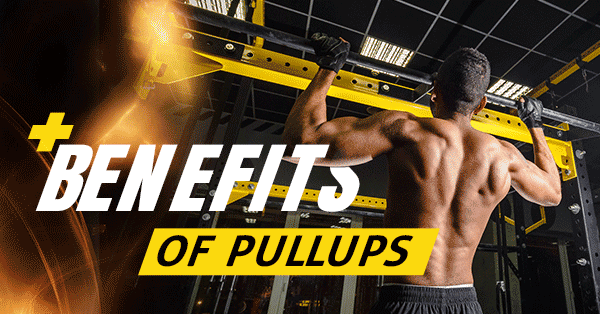
 The pull-up is one of the most under-utilized exercises for size and strength and don’t blame anyone for shying away from the pull-up bar and heading over to the lat pull-down for two reasons, pull-ups are hard and can get boring, fast. In this article however I am going to explain to you why they must be a staple in your exercise arsenal.
Now, there are a few different variations of pull-ups that all differ in terms of grip and width but for this article I will focus on the most popular pull-up that is an overhand, just wider than shoulder width grip set up.
I see a lot of pull-ups being performed wrongly, which completely takes the tension out of the muscles you want to be activating during a perfectly executed pull-up. A lot of these mistakes are seen when a weight is added to the pull-up when the person performing them can’t complete 12 or more, well executed body weight pull-ups. Which is another important consideration, if you can’t complete 12 or more well executed body weight pull-ups, stay away from the weighted ones. You are more likely to injure yourself and also look like a fool in front of everyone with your horrible form (which might scare your ego more than it does getting injured). So, how do you perform the perfect pull-up?
-
Find your grip. As mentioned earlier, this will most likely be just wider than shoulder width.
-
Grab the bar and momentarily ‘hang dead’.
-
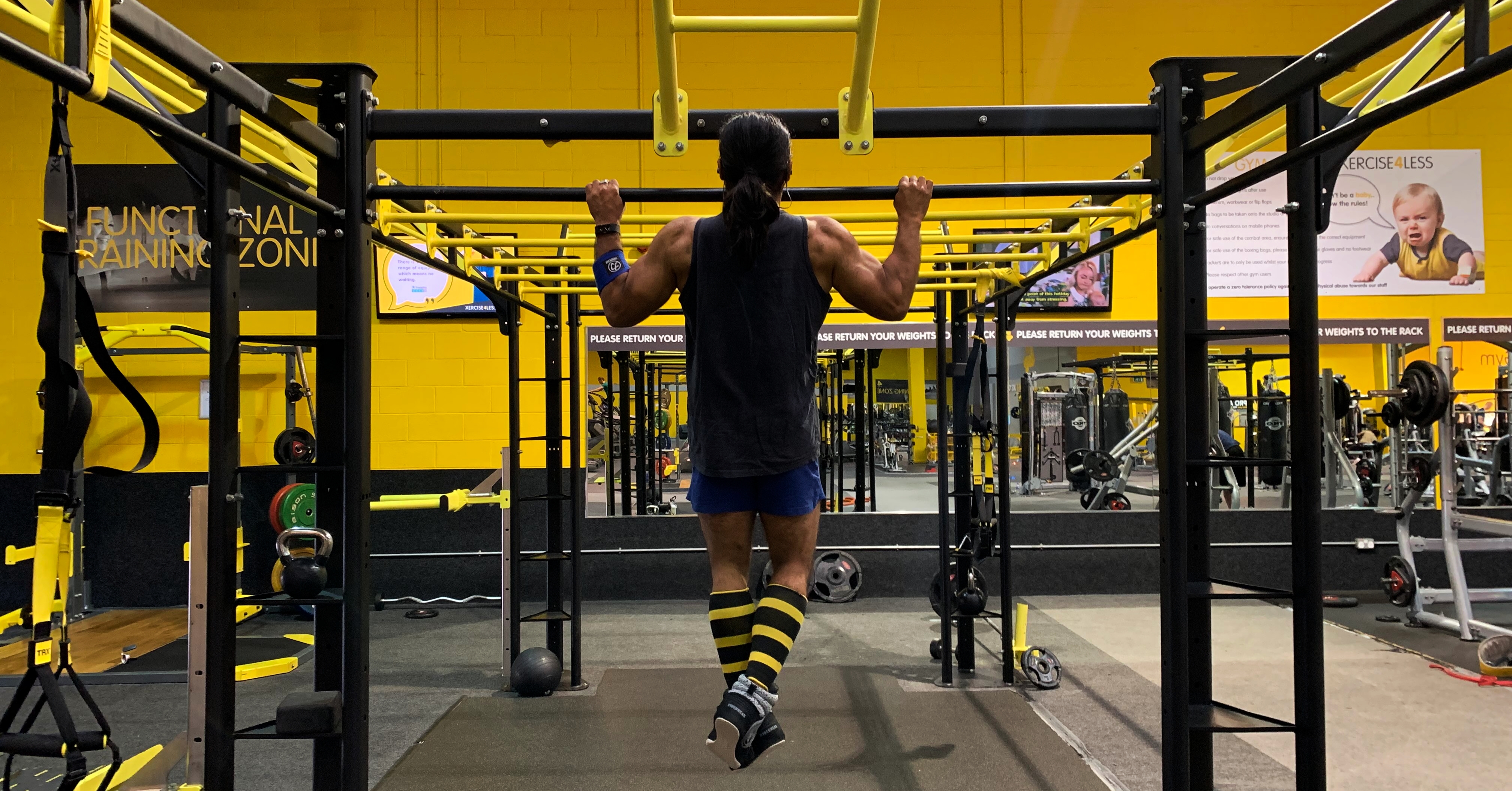
Retract your scapula, this will raise you slightly and then pull towards the bar. Imagine pulling with your elbows and make sure you engage your core and keep your shoulders back. This will help limit any swing.
-
Pull all the way until your chin clears the bar.
-
Lower yourself slower than you pulled yourself up to the starting position again, the dead hang. Retract your scapula and go again.
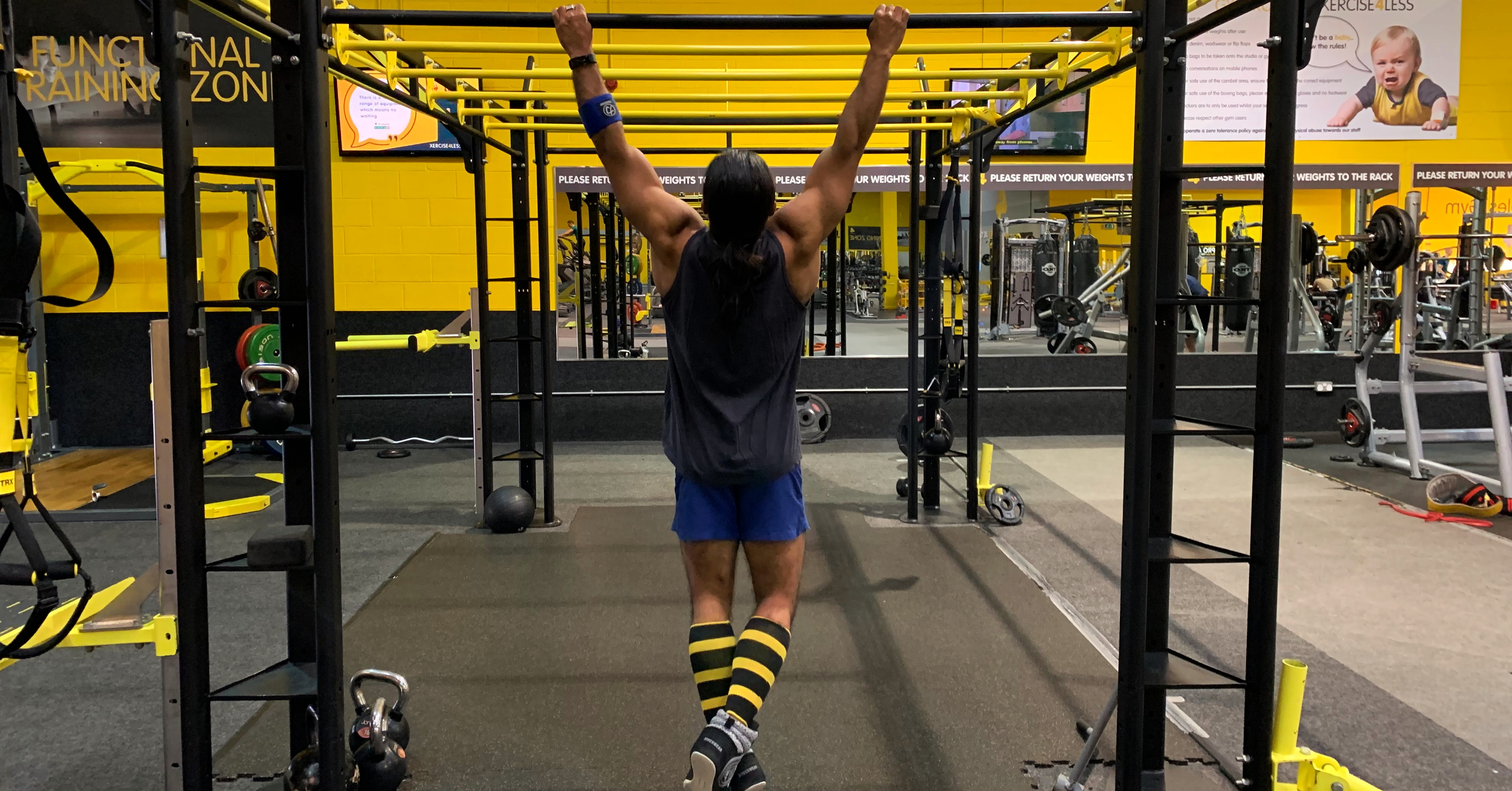 Master this and the muscles you will be working include the lats, biceps, traps, rhomboids and even the external obliques. The pull-up is truly an upper body mass builder, which, creates a nice transition for what I’m going to talk about next; the benefits of pull-ups.
As I mentioned, the pull-up has the potential to be a great upper body mass builder, not only for the back, but the biceps also. So if you are one of those people who heads straight for the lat pull down when training your back, swap this for the pull-up. If you can’t perform many pull-ups yet, don’t worry, I am going to run you through how to program them in later on in the article. Oh and remember, you aren’t going to build any new muscle unless you are in a calorie surplus!
One benefit of pull-ups that is often overlooked is the importance of having muscular balance. A lot of people only focus on the muscles you can see, the chest, biceps, shoulders, abs and quads. This results in a lot of pushing movements and can result in rounded shoulders and a poor posture. This doesn’t look aesthetic and can cause injury problems and imbalances.
Pull-ups also have a brilliant crossover into other exercises. Believe it or not, your lats are heavily involved when you bench press. In fact, they are involved in a lot of pressing movements. Increasing your pulling power can have significant effect on your pushing strength if you are neglecting pulling movements. They will of course increase your dead-lift strength too, as the lats play a large role in the exercise.
Your overall aesthetics will improve. Pull-ups are going to give you that ‘V’ look more than any other exercise. They will make your shoulders look wider and your waist appear smaller.
They also look bad-ass. If you can pull off a set of strict body weight pull-ups you are sure to turn a few heads at the gym. Imagine what the outcome will be when you start adding weight.
If you are already doing pull-ups with good form once or twice a week, I salute you, keep working hard, you know the benefits. If not, don’t worry, it’s not too late.
 There will be two types of people left, those that can already perform a few pull-ups for sets (around 6 or more reps) and those who struggle to hit any more than 3.
For those who can already perform a few decent sets with good form, I fitting pull-ups into your current routine twice a week, with a simple progressive overload format until you can hit 3 sets of 12. You might be able to do 8, 8,7 now one session. So next session may look like 8, 8,8 and then 9,9,8. Get where I’m going with this? Once you hit 3 sets of 12, add some weight to the equation and follow the same format.
If you cant complete 3 or more pull-ups there is a few ways around it. Most gyms now have assisted pull-ups. If you train somewhere with this option, this is where to start. Use the same format as above assisted until you reach a point where you don’t need any assistance for 3 sets of 12. At this point when you ditch the assistance, your starting point should be around the 5-7 rep range for 3 straight sets. If your gym doesn’t have an assisted pull-up machine, you can use bands to help with assistance, you can find them online fairly cheap.
Other exercises that will help out your pull-up strength will include dead-lifts, barbell rows and barbell curls. But nothing is better than the pull-up itself.
Now go grow some wings, good luck.