



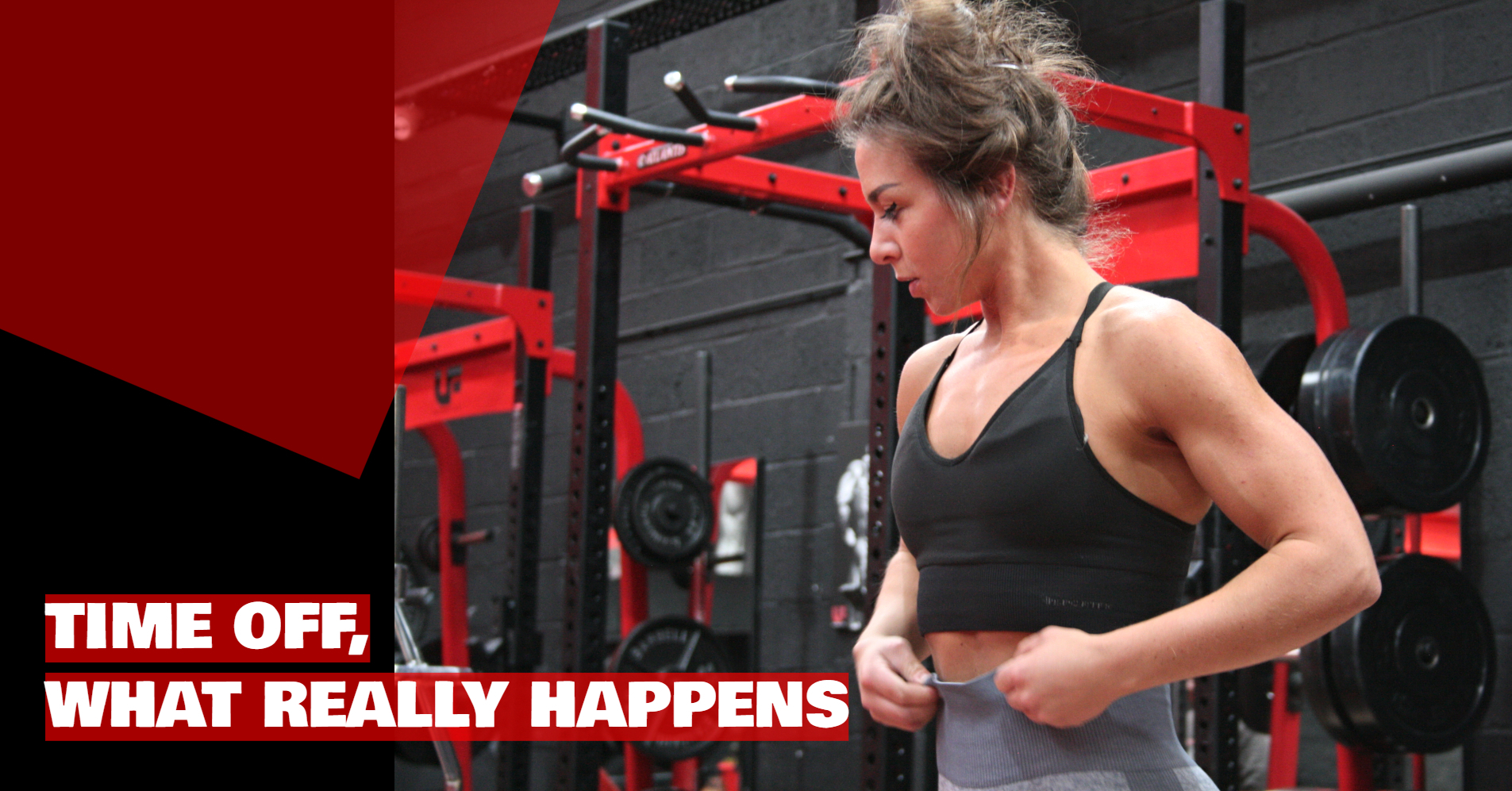
 Time off, it happens to all of us. Whether it be because of an injury, holiday or an unforeseen circumstance, we all end up having it at some point in our life.
Time away from the weights used to be my worst nightmare. I had worked so hard to get to where I was, all the hours, sessions planned, meals prepped. Getting injured or going on holiday just felt like I had wasted all that effort and let’s be honest, our bodies lose what we have a lot faster than the time it takes to get it. Thankfully though, it’s not actually as fast as you may think.
I presume you are reading this because most of you are anticipating some time off the gym due to other commitments, which is good news, as it most likely means you aren’t injured. However, to cover all bases I’m going to talk about what happens when you have prolonged time away from the gym. The good news is, if it’s just a one- or two-week holiday you are going away for, you aren’t going to really have to worry about anything more than some neuromuscular adaptation loss. That’s right, you won’t lose any muscle in one or two weeks if you keep your calories roughly the same and remain active for your holiday (walking, running, swimming).
 Neuromuscular adaptation loss
You probably already know about this one, you just didn’t know what it was called. If you have had some time away from the gym before, only to return and think to yourself that some of the exercises don’t feel as natural to you, then you’re right. As your body hasn’t been performing these movements as often, the connection between your brain and muscles slows down. The good news is this is quick to return within a week or so, but it’s important to ease yourself back in to avoid injury.
Loss of strength
The one you have all been dreading. The good news is that you can control (to some extent) the amount of strength that you lose. If you are sitting around all day doing nothing and your activity is very low, then you can expect to see a loss of muscle strength within two weeks. On the flip side, if you remain as active as possible during your time away then you can actually maintain your strength for up to three or four weeks.
 Your body becomes less metabolic
When you’re training, your body uses fat for energy and you increase your insulin sensitivity, which is good. The moment you stop training and your activity level is lowered, the body no longer relies on fat for energy, but uses carbohydrates as an energy source instead. As well as this, if you start to lose muscle then your metabolism will slow down as muscles need a large amount of energy to function. The less muscle you have, the less energy they need from food to perform. Meaning if you are still eating the same amount of calories as you were but with less muscle, fewer calories are being burned.
You may not feel as happy
Training is fun and most of us enjoy it, so naturally not being able to do something we enjoy isn’t going to make us feel great. There is some science behind it though, exercise is actually brilliant stress relief. It reduces the stress hormone cortisol and releases the feel good hormones called endorphins. This explains why you may feel happy and upbeat after a workout. It can also help you sleep as exercise is essentially putting our body under stress, which is tiresome. When it comes to recovery, sleep is essential and both our body and mind need it to function optimally. You may find yourself with more energy due to a lack of training, which could result in less sleep.