



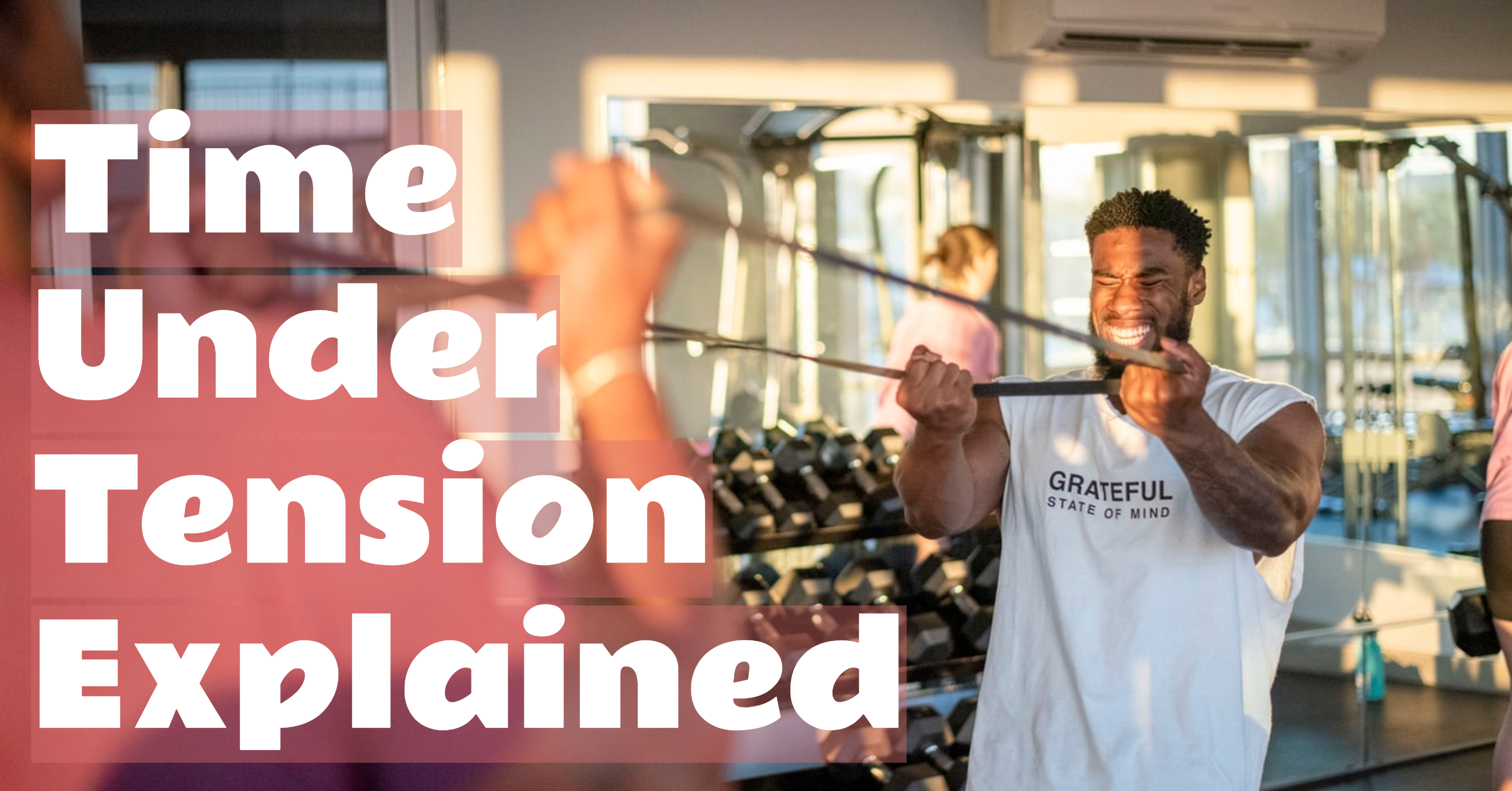
 Time under (Abbreviated as TUT) repetitions are performed with lighter weights than usual. Time under tension refers to the amount of time your muscle is under stress during a working set. This consists of the time spent in the concentric or the muscle-shortening, peak contraction phase, as well as the eccentric or the lengthening phase. For example, if you performed a set of 10 reps and each rep takes 3 seconds to complete, your muscle is under tension for a total of 30 seconds. If you were to perform the same exercise but if you spent 2 seconds in the concentric phase, 1 second to stop during peak contraction, and 3 seconds to lower the weight during the eccentric phase of the rep, the same 10 reps would end up putting your muscles under tension for about 60 seconds, hence resulting in more time under tension.
Simply increasing total TUT may not be enough to maximize your workout and help you to get the most hypertrophy (Muscle-growth) gains. Research suggests that paying more attention to the reps, slowing them down and controlling them, and doing fewer is the more effective way to increase TUT and reap the benefits. For example, instead of powering through 12 to 18 reps for 60 seconds, slow it down and do just 4 to 6 reps in 60 seconds. This will increase the window of time during which the muscles are actually under tension, therefore giving you more muscle growth.
 Here are some useful tips:
- Avoid the lockout.
Avoid spending long amounts of time during the easiest portion of an exercise (at the top of the rep for instance). The easiest part of the lift presents the least amount of stress on your muscles.
- Control your tempo.
A typical tempo in seconds for each rep during a set would be 2/4/0 (lifting, lowering, pausing).
- Focus on the eccentric part of the exercise. (Negatives)
This refers to the lowering portion when your muscle is slowly elongating. Slowing down the eccentric portion of the lift causes more muscle damage and hence encourages more hypertrophy.
- Form is Key
With the longer sets, fatigue will set in and compromise your form. Make sure you don’t cheat yourself and miss out on progress by breaking form or doing half-reps.
- Drop sets can help
If you're struggling to finish off those last few reps, drop down in weight and immediately continue with the exercise. This will help you to last the entire duration of the set and you won’t need to cheat to finish it.
- Keep the intensity high!
 Simply lifting till the finish doesn’t guarantee an increase in size. The weight and exercise need to be challenging enough to cause muscle fatigue towards the end of the set. Use at least 60% of your 1-rep max for each lift to maximize gains.
Time under tension is a great measure for the hypertrophic stimulus that each workout can provide, but only when only recording the time for which the fibres of high-threshold muscles are subjected to high levels of tension, (indicated by a slow fibre-shortening speed.)
Whether you use a fast or a slow tempo, the stimulating time under tension is usually mostly the same. Only in the final reps, when bar speed has slowed down from the fast tempo set, and when muscle recruitment has increased in the slow tempo set, is muscle growth stimulated. In the final reps, the actual bar speed is largely the same in fast and most slow tempos. When bar speed still differs, the slow tempo involves fewer reps because fatigue ends the set earlier.