



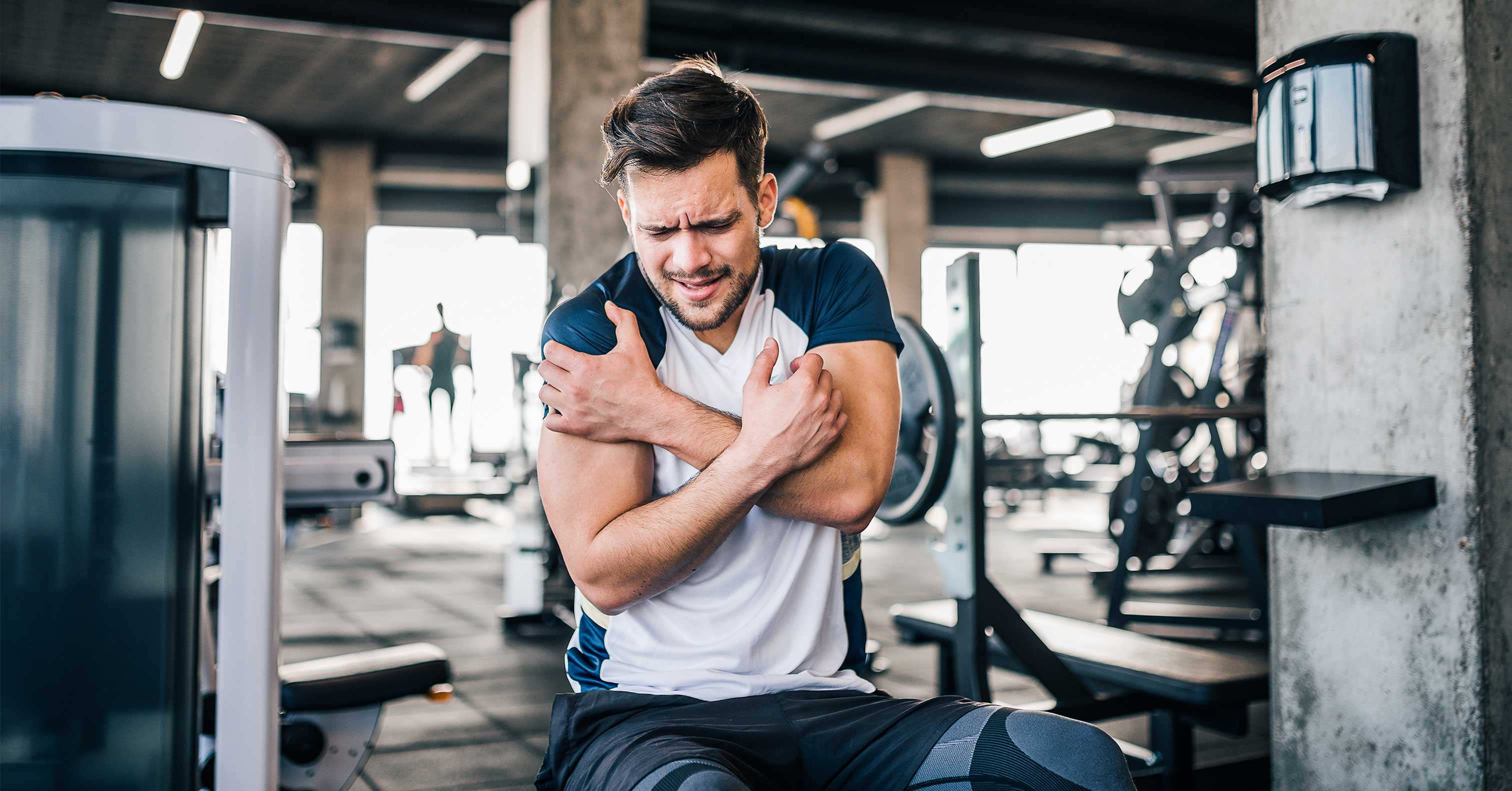
First of all we need to understand what we mean by DOMS.
DOMS Stands for Delayed onset Muscle Soreness, or more simply, just the soreness you experience the days after a hard workout. DOMS symptoms typically occur around 12 to 24 hours after your workout. The pain tends to peak about one to three days after, and tends to ease up shortly following.
You most likely have DOMS if you experience the following symptoms:
Muscles feel tender to the touch. Reduced range of motion due to pain and stiffness when moving. Swelling in the affected muscles. Muscle fatigue. Short-term loss of muscle strength.
A tough workout can cause tiny, microscopic tears in your muscle fibres. Your body responds to these tears by increasing inflammation, which may lead to a delayed onset of soreness in the muscles. Essentially any high-intensity exercise can cause DOMS, but one kind in particular, known as eccentric exercise, often triggers it. Eccentric exercises cause you to tense a muscle at the same time you lengthen it. An example would be the controlled, downward motion as you straighten your forearm after a bicep curl. The way your quads tense up when running downhill is also an eccentric movement.
 Some people think that unless you feel sore after every workout, you’re not making any gains. But this just simply isn't true.
When you start a new exercise routine or push your limits, you’re more likely to get sore. But as you keep working out, your body tends to adapt. You may feel less and less sore with each workout, but that certainly does not mean you’re not working out hard enough or that you’re missing out on your gains from those workouts.
The secret to treating DOMS is simply to keep moving.
You might be tempted to rest and avoid all exercise and movement when your body is sore, but unless it’s severe, spending the day on the sofa usually only worsens the pain and stiffness. It is important to listen to your body though, if your DOMS feels more like an injury then you should do some active recovery. Instead of going straight back to the gym with DOMS, try some light cardio or full body movement such as swimming or Yoga.
Unfortunately, it is nearly impossible to train effectively and avoid DOMS altogether, But there are some things you can do to reduce it.
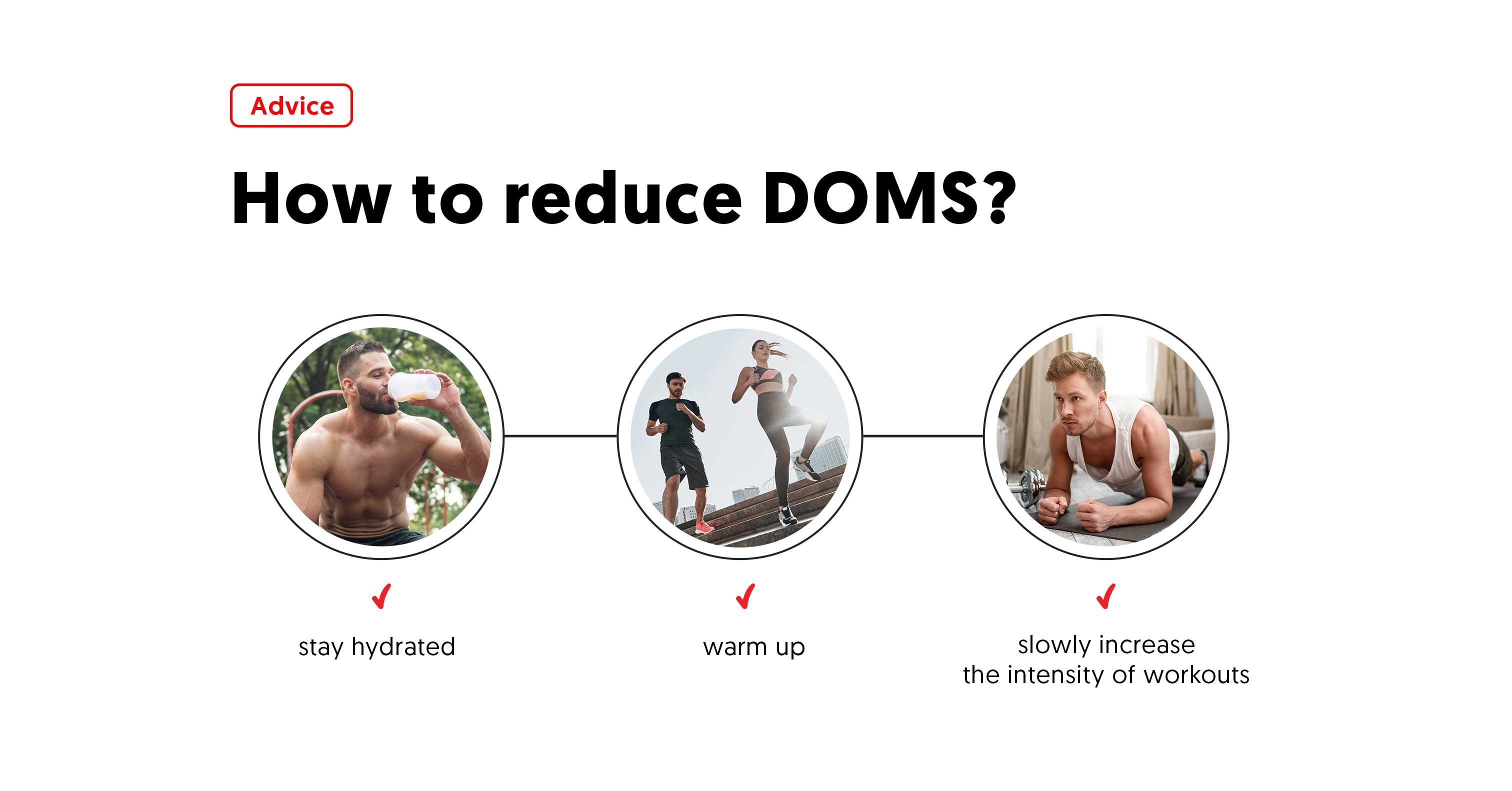
- First of all you need to stay hydrated. Drinking plenty of water around your training can massively reduce the effect of muscle soreness.
- It's also important to warm up. Spend some time before your workout doing some dynamic stretching, (Stretching with movement), and do some static (Still) stretching after your session.
- As well as the warm-up we need to do a cool-down. Doing a cool down using the same muscles you've just trained can really help to lessen the effects of DOMS, especially followed by some static stretching.
- If you really want to avoid DOMS then you should also increase the intensity of your workouts slowly rather than rapidly. This slow introduction to new stress will help your muscles to adapt at their own pace.
Don’t let DOMS prevent you from following your routine. Use these steps to reduce the impact DOMS has on your body. If DOMS does hit you in the days after your workout, do some active recovery to help to ease the soreness. Lastly, just be patient. DOMS will go away by itself, and your body will also become more accustomed to your workout routine over time and will stop responding to the training so negatively.